
The 16th ISSP World Congress: Acute Resistance Exercise and Inhibitory Control
Abstract
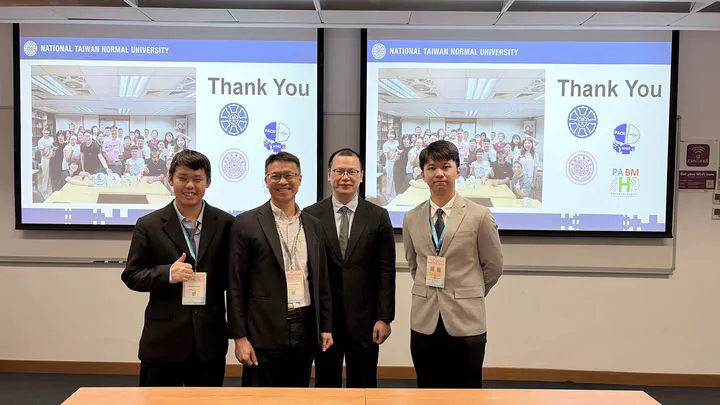
The 16th ISSP World Congress, sponsored by the Shine Tak Foundation and organized by the International Society of Sport Psychology (ISSP), took place from December 8 to 12, 2025, at the Hong Kong Sports Institute. During this prestigious event, Ying-Chu Chen (Steve) presented recent research titled ‘The Influence of Acute Resistance Exercise Volume on Inhibitory Control: A Randomized Controlled Trial.’ The study investigated the effects of low versus moderate-intensity resistance exercise on cognitive function, specifically inhibitory control, utilizing the Stroop Task. The findings suggested that when total exercise volume is equalized, both low and moderate-intensity resistance exercises yield comparable improvements in inhibitory control, highlighting the importance of volume over intensity in acute cognitive benefits.
Date
Dec 8, 2025 — Dec 12, 2025
Event
Location
Hong Kong Sports Institute
25 Yuen Wo Road, Shatin, New Territories
Certificate of Attendance: Mr. Ying-Chu Chen participated in The 16th ISSP World Congress, sponsored by the Shine Tak Foundation and hosted by the Hong Kong Sports Institute between 8 and 12 December 2025.
Presentation Highlights: In his oral presentation, “The Influence of Acute Resistance Exercise Volume on Inhibitory Control: A Randomized Controlled Trial,” Ying-Chu Chen discussed the relationship between resistance training variables and executive function. The study utilized a randomized controlled design to compare the effects of different exercise intensities with matched total volumes.
Key Findings:
Volume Matters: The study concluded that exercise volume might be a key determinant for acute cognitive benefits.
Intensity Agnostic: Both low and moderate-intensity resistance exercise protocols resulted in significant improvements in inhibitory control (measured by the Stroop Task) when the total volume was held constant.
Physiological Response: Lactate levels increased similarly across exercise groups, suggesting a comparable metabolic response supporting the cognitive gains.
Clinical Implication: Low-intensity resistance exercise can be an effective strategy for enhancing cognitive health, especially for populations unable to perform high-intensity training, provided the volume is sufficient.
This research contributes to the growing body of evidence in exercise cognition interaction, offering practical guidelines for exercise prescription aimed at brain health.
Read Next...